Episode 218: The Suspicious Death of Eduardo Tirella
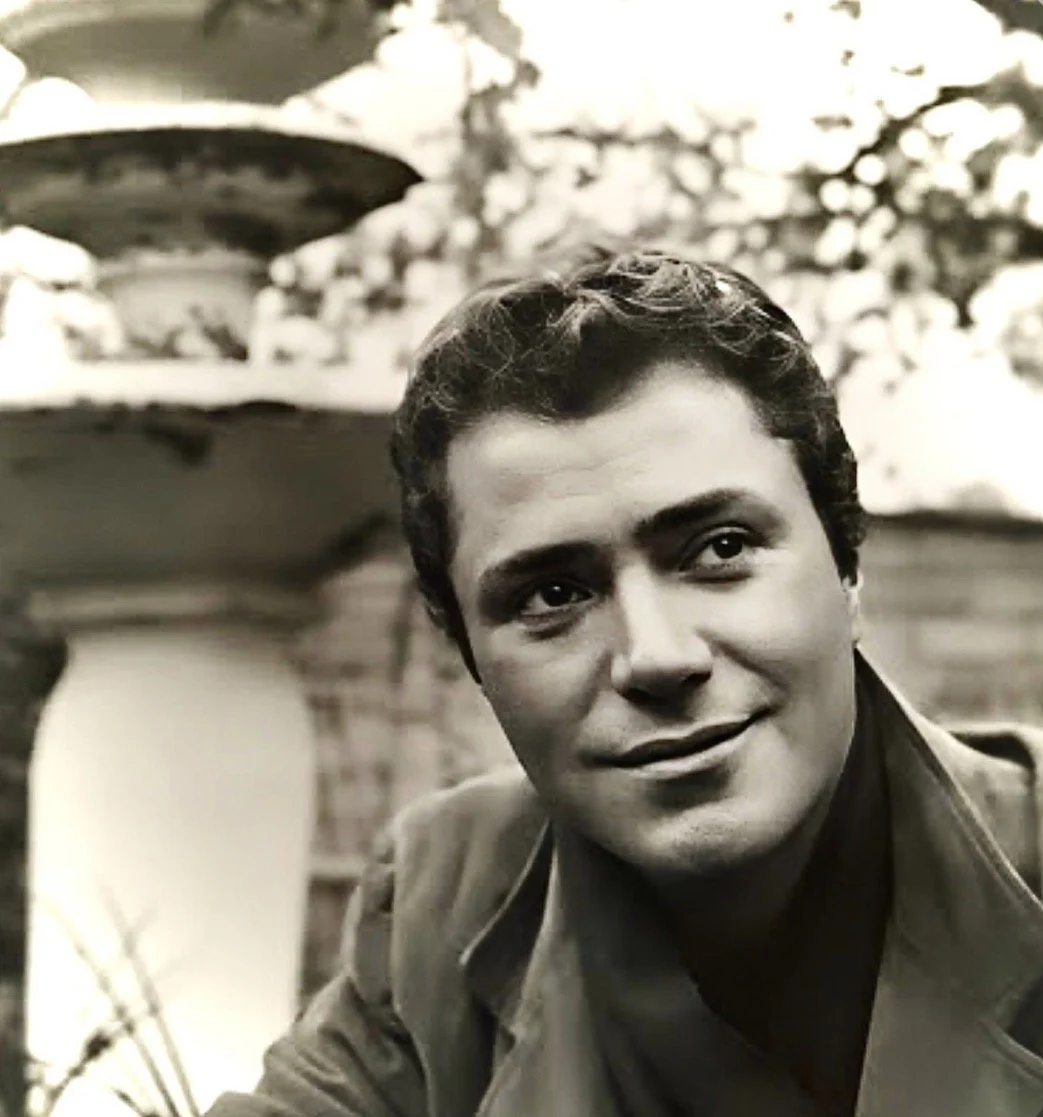
Eduardo Tirella was born in June of 1924 to Italian immigrants who had planted their roots in Dover, New Jersey. He was one of twelve children and the large, bustling family was deeply rooted in their Italian heritage. Growing up and as a young adult, Eduardo was known for being a natural star with an incredible amount of charisma as well as kindness. Described as a Renaissance man, Eduardo had a talent for anything relating to the arts and became good friends with stars like Frank Sinatra. He enlisted in the army during World War II, fighting in the Battle of the Bulge and returning home with a Bronze Star Medal for his service. Once back home, Eduardo began putting his artistic talents to good use, designing hats for the Saks Fifth Avenue millinery department in Beverly Hills.
As he grew older, his skills in the arts only became more vast. Eduardo began exploring interior design and set coordination as well as production design for movies that became widely popular, such as “The Sandpiper” starring Elizabeth Taylor. Eduardo and his longtime partner, famous sculptor Edmund Kara, loved to throw dinner parties and entertain for family and friends who included famous actors and other big names in Hollywood. Despite living a lavish lifestyle, Eduardo was incredibly kind and down to earth. These traits were quite the opposite of those possessed by his last employer before his death, a socialite named Doris Duke.
Doris’s father was James Duke, the founder of the American Tobacco Company, and he left Doris his fortune of over a billion dollars to 12-year-old Doris after his death in 1925. She was also left multiple properties, including Duke Farms, a 2700-acre farm in New Jersey where Doris had spent most of her childhood. A lawsuit was filed in 1927 as James Duke’s will had some loopholes that could allow for his properties to be sold, especially the farm in chunks of land, and Doris and a legal team successfully sued her own mother Nanaline Duke and other executors to prevent the farm and other properties from being sold. This would be just one of many lawsuits she would file in her life. Of all her properties, her favorite was a Newport, Rhode Island mansion called “Rough Point” on Bellevue Avenue, a street also referred to as “Newport’s Millionare Row.”
Doris had a deep passion for the arts, traveling the world to learn more and seek out new pieces, especially with Islamic and Southeastern art. She fell so deeply in love with this that she turned her home in Hawaii into what is now the Doris Duke Foundation for Islamic Art. It was not surprising when she became incredibly close friends with Eduardo Tirella. Eduardo had living quarters in every one of Doris’s five homes as he worked for her for over a decade as her artistic advisor and curator. He would help decorate her houses, appraise antiques and was Doris’s confidant as she valued his opinions and expertise greatly. It was said that she would not make an art purchase without confiding in Eduardo first.
Peter Lance, author of the book “Homicide at Rough Point” about his own investigation into Doris Duke’s role in Eduardo’s death, found that Doris was known for treating the staff in her homes badly and was known for pinching pennies wherever possible. She was known for never tipping service workers, making her staff pay for anything they damaged out of their own paychecks and on one occasion buying her staff frozen turkeys rather than fresh for Thanksgiving as they were $0.30 cheaper. She was quick to anger, had a short temper and those around her tried to never cross her. Eduardo, who lived in Doris’s homes and saw how she treated her staff, was known for trying to advocate for and help her other employees.
On the evening of October 6th, 1966, 42-year-old Eduardo had arrived at Rough Point after confiding in his friends and his partner Edmund Kara that he was going to talk to Doris about quitting his job working for her. He had been getting more jobs working on films as a production designer in Hollywood, most recently the Tony Curtis movie “Don’t Make Waves,” and he wanted to move to the West coast and pursue this full time. He was going to pack up his belongings and talk to Doris in person, and his friends and partner who knew Doris and how she could be told him that she was not going to take the news well. The next afternoon on October 7th, multiple staff members at Rough Point as well as other witnesses heard yelling and a heated argument between Doris and Eduardo. After arguing back and forth, the two got into a rented car, a 1966 Dodge Polara, at around 5:00 p.m. to leave together for a meeting with an antiques dealer for Eduardo to appraise one last antique for Doris.
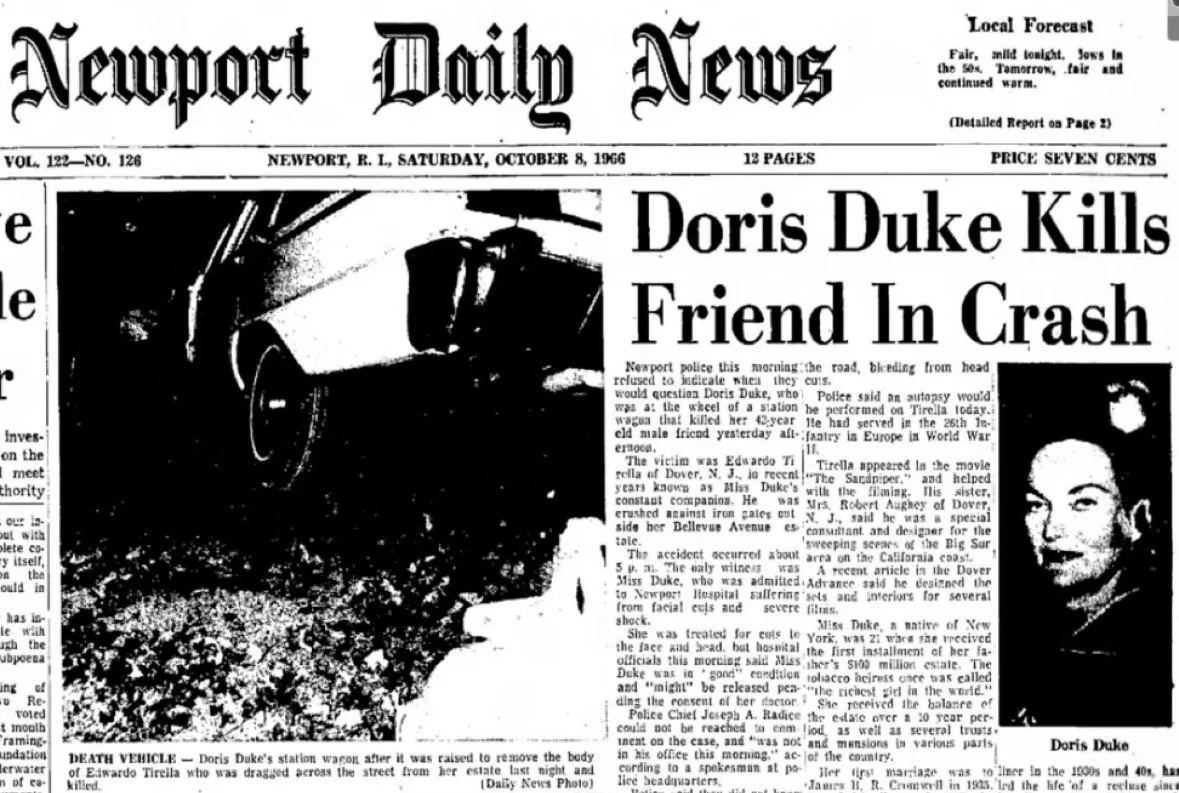
Eduardo was driving and Doris was in the passenger seat, and the two set off down the long driveway with a massive, sturdy iron gate at the end. Eduardo put the car in park at the end of the driveway and got out to unlock and open the gate as he had countless times before. As he was unlocking the gate, the car, now suddenly being driven by Doris, was no longer in park and was hurtling towards Eduardo. The car burst through the iron gate and then across the street before smashing into a tree. First to respond to the scene was a patrolman named Edward Angel who was in the area, and another patrolman named Norman Mather also quickly arrived on scene. Both police officers took note of the lack of blood on the gate, only finding blood as well as skin in the middle of the street.
Eduardo’s body was found trapped underneath the car, and he was pronounced dead at the hospital shortly after 5:40 p.m. His autopsy showed a fractured right hip, but oddly no other injuries to his lower body. The internal damage was catastrophic with extensive trauma to his spinal cord, brain and his lungs, and his death was believed to have been instant. His injuries were not at all consistent with an impact into an iron gate after being struck by a vehicle, which Officer Angel and Sergeant Fred Newton felt had never happened. Both officers felt that based on the evidence at the scene such as the blood in the middle of the road and not on the gate as well as tire marks in the gravel driveway showing an acceleration, Eduardo had jumped onto the hood of the car as it sped towards him and through the gate before coming to a screeching halt in the middle of the street, throwing him off of the hood and hard onto the pavement. This would explain the blood and skin in the middle of the road as well as the broken hip from impact. He then seemed to have been pinned under the car as it sped forward again.
Doris was found at the steering wheel inside of the car, and she remained silent while the officers attempted to ask her questions as if she were in shock. Police Chief Joseph Radice arrived on scene, ushering Doris back inside her mansion before she was taken to Newport Hospital. Dr. Philip C. McAllister ensured Doris had a private room away from the prying eyes and invasive questions of police, who were told by Dr. McAllister that Doris was in no shape to answer their questions due to her being in shock. Dr. McAllister happened to be the acting state medical examiner at the time, and Doris had hired him as her own doctor. Author Peter Lance had written, “In effect, the man legally charged with determining the official cause of death had gone on Doris Duke’s payroll.”
When Doris finally agreed to speak to police, she was in the comfort of her own home in her bed with her attorney present. Chief Radice seemed alarmingly satisfied with her account of events, which included her claiming that she slid into the driver’s seat of the car to drive through the gates once Eduardo opened them, but accidentally hit the gas instead of the brake. This sent the car flying forward, crushing Eduardo against the gate and dragging him underneath before the car crashed into a tree across the street. Despite her claims not at all aligning with the evidence found at the scene, Chief Radice closed the case after determining it was simply “an unfortunate accident.”
Following Eduardo’s death, Doris seemed to have a sudden change of heart when she became quite the philanthropist. She had been involved in heated legal disputes with the town of Newport about the Cliff Walk, a beautiful scenic trail right on the ocean that passed the mansions. Her German Shepherds had attacked pedestrians on the trail multiple times as Doris would intentionally unleash them and let them run around wherever they wanted, causing a heated dispute and Chief Radice demanding the dogs be put down. After Eduardo’s death, Doris donated $25,000, or $199,000 in today’s money, to restore the Cliff Walk. She also donated $10,000 to Newport Hospital and began restoring multiple historic properties around Newport after forming the Newport Restoration Foundation. It became highly suspicious of Doris possibly paying Chief Radice off with a large sum of money when he retired several months after Eduardo’s death and bought himself two Florida condos.
Despite all of this money being thrown around, Eduardo’s family had to fight for compensation for the death of their loved one who was supposed to have been a close friend of Doris’s for over a decade. In 1971, they sued her in civil court where she was found negligent and had to pay Eduardo’s siblings. They walked away with just $75,000, which after legal fees and split among them left them each with $5,620. Meanwhile, Doris was raking in over $1 million dollars every week in interest alone. Peter was able to speak with one of Eduardo’s nieces named Donna, and she stated, “Doris Duke killed Eddie twice: She destroyed his body and then she eviscerated his memory.”
Despite her having died without facing any legal consequences for Eduardo’s death, Peter Lance is determined to set the record straight on Doris intentionally killing Eduardo. He found extensive incriminating evidence, including hidden police reports, Eduardo’s autopsy and witness accounts from people he tracked down himself. Peter was also able to locate the owner’s manual for the same vehicle Doris had rented and driven into Eduardo. The owner’s manual revealed that the parking brake on that specific model could only be released from the lever on the left side of the dashboard by hand, disproving Doris’s claims that she accidentally hit the gas pedal instead of the brakes. If you would like to read in incredible depth about this case, you can read Peter Lance’s book “Homicide at Rough Point” or his Vanity Fair article with the same title.
Image sources:
findagrave.com - “Eduardo Michael Tirella”
newportri.com - “Eduardo Tirella’s family wants Newport Restoration Foundation to correct errors in its exhibit, niece says”