Episode 212: Michael Woodmansee

5-year-old Jason Foreman
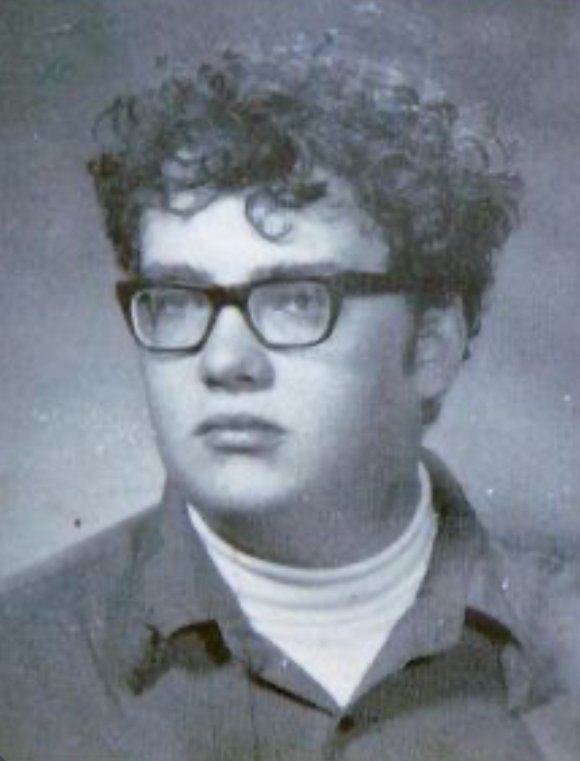
A yearbook photo of Michael Woodmansee
5-year-old Jason Foreman was a beautiful little boy who loved laughing and playing in the neighborhood and with his family. He was last seen on May 18th, 1975 playing in his backyard and nearby wooded area of his South Kingstown, Rhode Island home with his siblings and other kids in the neighborhood. His mother Joice heard the sound of him laughing at around 3:30 p.m. It was her birthday and everyone was looking forward to celebrating later that evening, but when the afternoon turned to evening and Jason still wasn’t home, things quickly took a turn. Concerned, his mother reported him missing, and family, friends and neighbors tried to find little Jason. The search grew into a massive effort to locate the 5-year-old with volunteers joining the effort and police interviewing anyone they thought knew remotely anything about where Jason went. Days turned to weeks and weeks turned to months, but as time went on the searches turned up nothing.
The only lead that came about didn’t come until seven years after Jason’s disappearance. In 1982, police were made aware of 23-year-old Michael Woodmansee and his connection to Jason’s disappearance. Michael was just 16-years-old at the time of Jason’s disappearance and lived in their neighborhood. As he was a teenager at the time, he wasn’t seen as a threat or person of interest and he was never considered as a possible suspect. In 1982, Michael was arrested for the attempted murder of another young boy in the area. The boy, said to have been 14-years-old at the time, was the paperboy and had been lured into Michael’s house after Michael offered him alcohol. The boy was able to escape after Michael tried to strangle him, and he was able to run away and call the police.
As Michael was being interrogated, police realized the parallels between the attempted murder of the paperboy and the disappearance of Jason Foreman. Not only did Michael admit to abducting Jason and murdering him, he also told police extremely disturbing details. A lot of the details of the murder have never been released due to the extent of their brutality, but one thing that Michael admitted to was engaging in acts of cannibalism with Jason’s body. While searching Michael’s home, police located several pieces of incriminating evidence including a journal where Michael had written in graphic detail about the murder. He had also kept some of Jason’s bones. Police found several bones, including Jason’s skull, shellacked for preservation and kept in his bedroom. Michael tried to say that everything in the journal was false, but this was obviously not the case.
Jason’s dad John Foreman stated, “You know it was a little bit of a relief at least I knew where he was. But my wife and I, we cried and cried, all those years our son was just across the street."
Michael was offered a plea deal to avoid going to trial and as a result was charged with second-degree murder. He was convicted the following year in 1983 and was sentenced to 40 years in prison. The court also ordered that the journal Michael wrote with the incredibly graphic details would be sealed to prevent the information inside from getting out and further traumatizing Jason’s family.
This was a shockingly short sentence for the extent of the crimes he committed, especially to a 5-year-old, and when the news broke there was public outcry. Jason’s family was alarmed and outraged, and they couldn’t believe that Michael would be getting out of prison in his 60’s with plenty of time left to commit other crimes, especially as Michael only got caught for Jason’s murder when trying to harm another young boy. Jason’s dad, John Foreman, was very vocal about what he and his family were put through already through the horrific loss of their loved one, and the hell they were now being put through with this devastatingly short sentence.
In 2011, after just 28 years in prison, Michael Woodmansee became eligible for early release. This was part of his good behavior and good participation in programs within the prison system. This sudden announcement of Michael’s eligibility for early release came as a shock to the community and of course Jason’s family. This grew state and national attention as Jason’s family and the community started petitions to keep Michael in prison and loudly protested against his early release. Hundreds of people gathered to protest against the release, and South Kingstown Police also voiced their concerns and disagreement with Michael being released. Jason’s sister Raven said that she and her family walked around the mall, in neighborhoods, at bus stops and around the community to petition to keep Michael in prison.
Even though the journal Michael kept had been sealed when he was sentenced, the South Kingstown Police Department handed over the journal to the Rhode Island Department of Corrections to show them what he was capable of to keep him behind bars and from being released early. The journal was read by two court-ordered psychiatrists who then conducted interviews and reviewed his records before making recommendations about whether or not they felt it was appropriate for Michael to be released early or be sent to a psychiatric facility to serve the rest of his sentence. South Kingstown Police Chief Vincent Vespia stated, “It is a booklet, several pages in length. It is written in paragraph form. I will not tell you what was in it, but I will tell you that it was a horrible, horrible crime, among the most gruesome investigations I have ever participated in and I've been around the block a few times."
During his two decades in prison, Michael applied for parole three times, but was turned down each time. Now he was on the cusp of being released 12 years early with a clean cut from prison. John stated, “I got real mad, I got angry. I got upset. I got scared. All of these emotions were going through my head. I didn't know there was such a thing called early release. Parole, yes. But not early release." During an interview with a local radio station, John said that when Michael got out of prison, he would find him and kill him. John told Good Morning America, “Initial feelings were I wanted to kill him the same way he killed my son. I wanted to hurt him bad. I wanted him to suffer … And those feelings are still in my head every day, that's the problem. I can't get 'em out of my mind.”
Michael ended up being released from prison at the age of 53 in September of 2011. He was sent to a psychiatric facility, the Eleanor Slater Hospital in Cranston, Rhode Island, to serve out the rest of his sentence. Michael’s early release was a result of Rhode Island’s “Good Time” state legislation that essentially works in a way where incarcerated people can earn credits that add up to time reduced from their sentences. For good behavior, you can earn up to ten days off each month and earn time off of your sentence for working while incarcerated as well.
At the time of Michael Woodmansee’s possible good time eligibility release, there were no exceptions for people who had committed violent crimes. As a result, new legislation was introduced to prevent people who committed violent crimes such as murder, kidnapping a minor and assaulting a minor from being eligible for good time early release. Representative Teresa Tanzi stated, “When victims and their families are told the person who committed the crime against them will be locked away for a long time, they should have some reasonable assurance that they will not be let out as much as one-third earlier simply for not committing any new offenses while in prison.”
She also stated, “Going forward the only way a serious offender (as described above) could earn time off his or her sentence would be by actively participating in rehabilitative programs, such as substance abuse or educational programs that teach useful life or career skills. Such programs deliver as much good for society as they do for inmates; by offering offenders opportunities to acquire ‘soft’ skills they may otherwise lack, or career skills that will give them employment options when they are released, such programs reduce the probability they will turn again to crime.”
Image sources:
alchetron.com - “Michael Woodmansee”