Episode 224: The Murder of Amasa Sprague
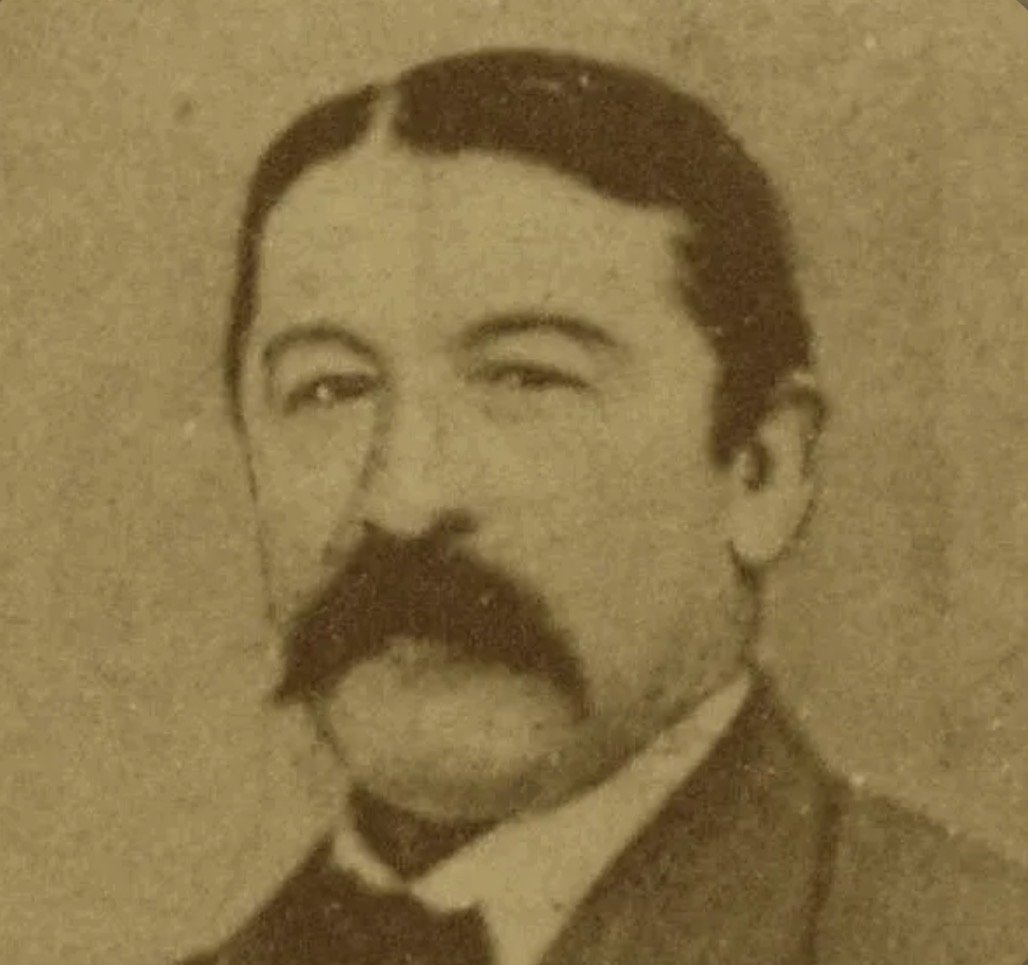
Amasa Sprague was born in April of 1798 in Cranston, Rhode Island. The Sprague family was incredibly wealthy and had significant influence in Rhode Island. Amasa’s brother, William Sprague III, was a U.S. Senator and former governor, and multiple other family members were in various political positions as well. Most of the family’s wealth came from textile mills, and Amasa at the start of his own career had worked with his father, William Sprague II, in his cotton mill. After his father’s death in March of 1836, Amasa and his brother William III founded A&W Sprague to run mills of their own. These textile mills specialized in cotton and calico. Amasa specifically oversaw the A&W Sprague Mill in Cranston, Rhode Island, and he ran the mill with profits in mind over working conditions. His mills had over 500 workers, most of them migrant Irish men, women and children. During this time period, Irish workers did not have access to many employment opportunities and were heavily exploited in the workplace at jobs they were able to get. Amasa especially took advantage of Irish immigrants, paying them mostly in credit to the company store and company housing that he owned to maximize his profits.
An Irish store owner named Nicholas Gordon had made a decent living for himself and his establishment was greatly popular with the Irish population in the area, including the mill workers. Nicholas had come to America from Ireland in 1836, and after arriving he was able to rent a store space. He then used the store profits to buy some land to build his own dry goods store, and above it a second-floor apartment in Spragueville. After he got a liquor license the store became hugely popular, and once Nicholas applied for and obtained a tavern license that allowed him to sell alcohol by the glass, business was booming. He used the profits to fund passage to America from Ireland for the rest of his family. His mother Ellen, sister Margaret, his niece and his brothers Robert, John and William arrived in Rhode Island in July of 1843. They had spent almost a decade apart and were finally reunited.
Over that same summer of 1843, Amasa began noticing that some of his workers were drinking before coming into the mill, and some were even caught drinking during working hours or on their lunch breaks. This led him to place blame on Nicholas and his business, citing the fact that he was also an Irish immigrant. There had been some recent accidents in the mill and production had decreased, which Amasa felt was due to his workers drinking. As a result, Amasa used his position as a powerful figure to deny Nicholas’s liquor license when he applied for renewal, and Nicholas began to see a huge decline in his own profits. Nicholas was very outspoken about his disdain for Amasa and his anger with his liquor license being denied, with some people claiming that he had said he would get his revenge.
On December 31st, 1843 at around 4:00 p.m., 45-year-old Amasa left his mansion in Cranston where he lived with his wife Fannie and their four children after a meal to check on the livestock on a farm he owned in Johnston, the next town over. A few hours had passed and he hadn’t returned home, which began to raise alarm as it was Fannie’s birthday as well as New Year’s Eve and the family had plans. Amasa’s body was found later that evening by one of his servants, a man named Michael Costello, and he was in such bad shape that Michael didn’t recognize him at first. Broken fragments of a gun were found around the scene, and it was determined that Amasa had been pistol whipped so hard that the musket gun split into pieces. He had been badly beaten and had a gunshot wound in his wrist. His skull was fractured in three places and part of his brain could be seen protruding from his head. Both his jaw and cheekbone were broken and his nose was completely turned to one side. It was clear to authorities that Amasa had been ambushed while crossing the small footbridge on his property and that he had tried to fight back hard against his attackers. His gold pocket watch and $60 found in his pockets were untouched, making it clear that one of the wealthiest men in the state hadn’t been robbed and that this was personal.
The next day on January 1st, 1844, everyone looked at Nicholas Gordon as the prime suspect. Convinced that he was responsible and didn’t act alone, Nicholas as well as his younger brothers John and William were arrested. Authorities were convinced the Irish immigrants, who already had the odds stacked against them for being Irish in a time where they faced discrimination, worked together to ambush and kill Amasa purely as revenge. The Gordon’s dog was also arrested and authorities took paw prints to see if the dog had been at the scene. It was decided that John and William were to be tried together after they were charged with the murder while Nicholas, who was charged with accessory before the fact after being accused of asking his younger brothers to carry out the crime for him, was tried separately. Nicholas also had an alibi on the day of the murder as he was at a baby’s Christening in Providence, Rhode Island on the day of the murder while his brothers did not attend.
As the area had a huge population of Irish immigrants as well as Italian immigrants, and these immigrants were instrumental in labor unions and workers rights movements, the brothers had extensive support from the working class. The wealthy however were outspoken against the brothers, and with the huge power the Sprague family held, the investigation was corrupt from the start. Amasa’s brother, who at this time was a Senator, resigned to lead the murder investigation despite it being a conflict of interest. Any evidence found was kept in the Sprague mansion rather than securely with the Sheriff, and the judge, Chief Justice Job Dufree, ordered that Irish witness accounts were to hold less weight than other witness accounts, stating, “give greater weight to Yankee witnesses than Irish witnesses."
Other aspects of the corrupt investigation included a sex worker used as a witness who mixed up her identification of William and John on multiple occasions, a coat found at the scene said to be John’s was several sizes too large for him and a black eye John got in a fight before the murder was used to prove John was there and had been struck by Amasa as he fought back. Authorities used the main piece of evidence of the shattered musket gun to place the blame on the Gordon brothers as Nicholas’s handgun he kept at his store for safety had gone missing after the murder. Both trials took place in April of 1844, with Nicholas’s separate trial ending in a hung jury. He was to be retried after the trial for his two brothers ended. William and John’s trial ended after nine days with William being found not guilty but John being found guilty for Amasa’s murder. He was sentenced to death and was to be executed in February of 1845.
The trial and subsequent death sentence caused public outcry among the immigrant population, working class and labor unions, especially as William had come forward with Nicholas’s gun he had hidden after the murder out of fear that the crime would be blamed on him. 29-year-old John Gordon was hanged at the state prison in Providence on February 14th, 1845. Father John Brady, an Irish Catholic priest, was at the execution to hear his last confession and stated, “John, forgive your enemies. They don’t know what they’re doing. You’re going to join a myriad of other Irish martyrs who have been killed for the same thing: Nothing.’” The funeral was packed with over 1,000 people in attendance, and people had come from all over Rhode Island as well as Massachusetts, Connecticut and New York to attend. The funeral procession took a different route than what had originally been decided on to walk John’s body past the Statehouse and the mansions of the wealthy.
Nicholas had two more trials, both ending in a hung jury, and while he was a free man after this he was tortured by the execution of his innocent brother. He died 18 months later after drinking heavily and becoming an alcoholic. John Gordon was the last person to be executed in the state of Rhode Island as they went on to become one of the first states to abolish the death penalty in 1852 partly due to John’s execution. It was amended in 1873 to allow capital punishment for murders, but no one ended up being executed after the amendment and it was removed altogether in 1984.
On June 29th, 2011, Governor Lincoln Chafee pardoned John Gordon after legislation was introduced by State Representative Peter F. Martin and Senator Michael J. McCaffrery. A memorial headstone was made for John Gordon in October of 2011, and the stone reads “Forgiveness is the Ultimate Revenge.’’ Amasa’s murder was never solved. His mansion is now the Cranston Historical Society.
Image sources:
findagrave.com - “Amasa Sprague”