Episode 215: The Murder of Barbara Beach Hamburg
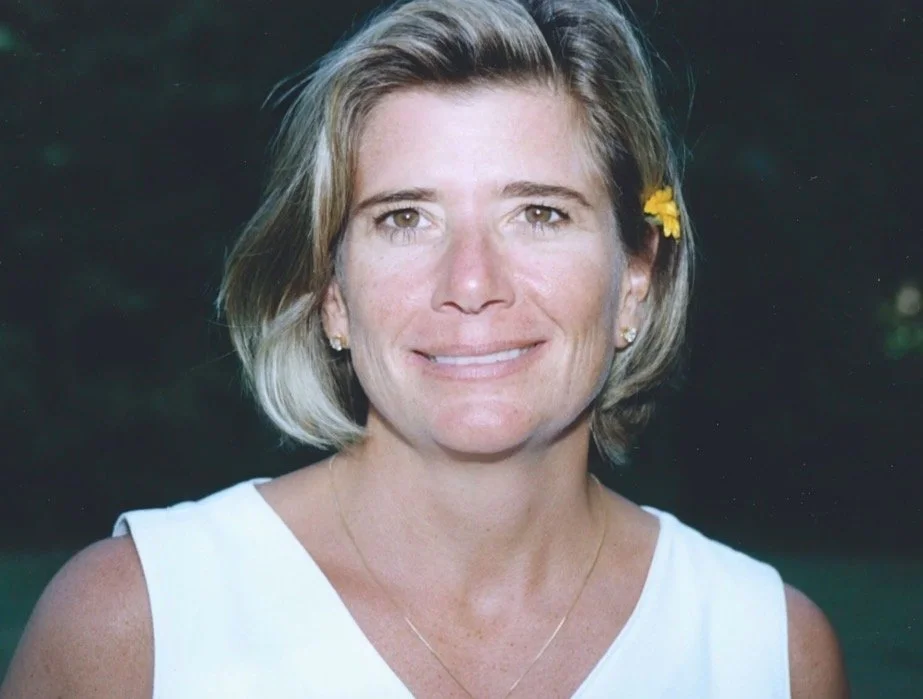
Barbara Hamburg was born on April 29th, 1961 in New Haven, Connecticut. Growing up, she loved anything to do with the outdoors and being outside. She was athletic and loved to travel. A quote from her obituary states, “Most of all, she loved life and she radiated her love to others through her energy, spirit, and good will, helping those in need, and drawing deeply on her compassion for others. Her membership in AA was a centerpiece of her life for the past five years. Barbara was a tireless worker, supporting others to recover, bringing great joy to the Madison and New Haven AA community. A beloved mother, cherished daughter, adored sister, and steady friend, Barbara brought light into the lives of everyone she knew.”
On March 3rd, 2010, 48-year-old Barbara was found dead outside in the yard of her waterfront home. She was renting a beautiful three bedroom home for herself and her two children, her son Madison and daughter Ali, in the coastal town of Madison, Connecticut. Her body was covered in couch cushions and it was clear she had been beaten and that a struggle had taken place. Barbara was found by her older sister Conway Beach and her daughter Ali a bit before 11:30 a.m. after Ali was trying to get a hold of Barbara to give her a ride home from school. Conway ended up picking up her niece from school and when they got to Barbara’s house, they came across the scene. Barbara’s car was still in the driveway, which was surprising as she wasn’t answering the phone. Conway then noticed that a statue of a dog at the front of the house was broken and Barbara’s purse and keys were on the ground in the front of the house as well. Conway then walked around the side of the house to find the couch cushions and Barbara’s body underneath.
That same day of her murder, Barbara also had multiple missed calls from her lawyer. She was due to be in family court in New Haven for court proceedings involving her ex-husband, Jeffrey Hamburg. Just one month prior, a judge had told Jeffrey that he needed to pay back over $400,000 in alimony and child support that he owed, and if he did not pay this he was looking at jail time. $153,000 was owed to Barbara, and $324,000 was owed to his children as he stole this money from their college and education funds. Barbara was known for being so punctual that she was always early, so her lawyer Richard Callahan knew something was wrong and had “a very uneasy feeling” when hours went by and Barbara didn’t show up to court. The hearing was eventually postponed after several hours of waiting, and when Richard went back to his office, he learned that there was an investigation into a death on Barbara’s street.
Initial investigation revealed that Barbara’s purse had been dropped on the front lawn where it seemed as though an attack had occurred. There was an oddly placed pallet outside of the home, and underneath was a pool of blood. It seemed that this is where the murder took place before Barbara’s body was dragged to the side of the house to better conceal it, especially from the view of the golf course next to the home. Autopsy showed that Barbara sustained significant blunt force trauma that is suspected to have been caused by a hammer. One of her arms was broken, she had a broken rib as well as multiple defensive wounds to both hands. She had multiple stab wounds to her neck and her carotid artery had been damaged. Barbara had been stabbed 18 times in total. Her death was ruled a homicide. A private investigator said that based on the extent of the injuries, it seemed that the perpetrator was enraged when they killed Barbara and that it also seemed like they knew her personally. DNA collected from the scene was unfortunately found to be faulty, and DNA from Barbara’s body wasn’t able to be retested as she had been cremated per family tradition once the medical examiner’s reports were completed.
Barbara’s son Madison was out of state attending film school at the time of her murder, and he created a documentary about her life and murder that initially started as a school project and evolved over time into an investigation into the unsolved homicide. This can be found on HBO Max and is titled “Murder on Middle Beach.” Madison explored possible suspects, including a man in a ski mask spotted outside of Barbara’s window by her and a friend the afternoon before her murder, his father and Barbara’s ex-husband Jeffrey as well as other family members.
Conway and Barbara had at one point a very strained relationship when Conway was struggling with substance abuse and addiction as well as homelessness. Barbara had taken her to court and got custody of her son, causing Conway a lot of anger. In the throes of her addiction, Conway began asking people how to go about hiring a hit man to kill Barbara, her husband and children. She ended up meeting a man at a hotel to pay him for the services, but she was scammed and robbed of the money. Conway claims she told Barbara about this and they were able to repair their relationship, and she claims she told police about this as well. Conway still has Barbara’s purse that she found on the ground outside of the house on the day of the murder. She said that police never took it in as evidence despite her telling them she found it on the ground, and they never looked at it or took any fingerprints from it.
Barbara’s aunt and Madison’s great-aunt, Jill Platt, helped lead and was heavily involved in a pyramid scheme that she got Barbara involved in as well. Jill insisted that she and a group of women, who would get dressed up and throw dinner parties, were “just a club” and that nothing they were doing was illegal. The scheme was for “gifting tables” that required new participants to start out at the bottom level called “Appetizers” once each newcomer “gifted” $5,000 to the one person at the top on the last level called “Dessert” who would get a cash pool of $40,000. The only way to move up in levels from Appetizers, Soup and Salad, Entree and then Dessert was to recruit new women. The group was exclusive and invitation-only, appealing to a lot of the women involved.
The Department of Justice later found that the group used charitable donations as a way to get out of paying taxes, and this led to the table leaders making thousands of dollars under the table and tax-free. Multiple women later came forward and said that despite making it to the Dessert level, they didn’t see a cent of the money. Along with the group itself being controversial, Barbara’s methods for recruiting new women were also viewed as controversial. She had advanced past the “Dessert” level and had become a known recruiter, and she recruited women from AA meetings she attended. Jill Platt said that Barbara began drinking heavily after her divorce, eventually getting a DUI and going to inpatient treatment that was very helpful for her. Once involved with the gifting tables, Jill said other women in the group voiced not liking how Barbara was “preying” on women from AA.
Four months before Barbara's murder, one of the women in her network actually called the office of Connecticut Attorney General Richard Blumenthal to report predatory behavior. Richard’s office put out a public statement and warning to the public that this group was a Ponzi scheme and was illegal. This resulted in a lot of women being mad at Barbara. Jeffrey, Barbara’s ex-husband, said that he felt as though not only the women from AA were angry with Barbara but their husbands as well for the secretive and excessive spending into the scheme. Some women sold their cars and even lost their life savings to come up with the funds to participate in the group and keep taking part in the scheme, and it was encouraged by the group to keep involvement private and not tell spouses or others not involved themselves. Jill Platt and Donna Bello, the leaders of the group, were both arrested and sentenced in 2013 on multiple charges of fraud and financial crimes.
Barbara’s ex-husband Jeffrey Hamburg also ended up in jail related to his failure to pay both alimony and child support. He was actually put in jail for this once before Barbara’s murder, just one night in June of 2009, and a second time afterwards for three months in 2012. In February of 2012, he was found in contempt of court and was put in jail until he could produce $50,000, but was released in April of 2012 after paying $20,000. The judge found it odd that despite not making any child support payments, Jeffrey could afford bail money and hire a defense attorney, and it was found that he had been stealing money from his children’s college and education funds. He was charged with first-degree larceny and had to attend a two-year rehabilitation program.
Jeffrey was president of Southern Electrical International Inc., working on energy projects in foreign countries. He was fired in 1991 for making an illegal deal internationally, but Jeffrey ended up suing them for defamation of character and won $2 million dollars. This was said to be a major blow to his reputation and ego, and this caused a shift where Jeffrey worked a lot overseas internationally. With this leaving Barbara alone with two young children, she felt abandoned and alone and ended up filing for divorce in 2001. A year later, Barbara and her two children moved to Madison, Connecticut. Barbara’s daughter Ali had at one time moved in with Jeffrey but described him as very controlling to the point where Ali moved back in with Barbara and did not speak to Jeffrey.
On March 5th, 2010, two days after Barbara’s murder, police went to Jeffrey’s home and multiple possible locations of where he may be to talk to him about the murder and his possible involvement. While he was sitting in court on the day of Barbara’s murder with multiple witnesses, police initially felt he may have had some involvement. Throughout the documentary Madison made, Jeffrey intentionally dodged all questions and conversation relating to Barbara’s murder and even her life and their marriage. He would also not discuss anything relating to documents that were discovered about offshore bank accounts, currency exchanges and reports of millions of dollars in deals with oil rigs and prime bank guarantees that were actually counterfeit. Also in these documents were letters from Barbara to her lawyer about being questioned by the FBI about Jeffrey’s involvement with all of this and that she needed help writing a will in case anything happened to her. This was about a decade or so prior to her murder.
In April of 2025, John P. Doyle Jr., State’s Attorney for the Judicial District of New Haven, and Madison Police Chief John Drumm announced that Governor Ned Lamont authorized a $50,000 reward for any information leading to the arrest of those responsible for Barbara’s murder. This is the highest reward legally allowed for an unsolved murder. While incredibly generous, Madison and Barbara’s lawyer Richard Callahan both have some questions about the timing of the reward. Madison stated, “I asked for this reward five years ago. Why wasn’t this reward posted when the murder happened, 15 years ago? Why wasn’t it posted on the anniversary, which was a month ago?” He also was not notified by police that there would even be a reward, stating, “I found out about the reward when everyone else did.”
No arrests have ever been made and Barbara’s case remains unsolved.
Anyone with any information on the murder of Barbara Hamburg is asked to please go to barbarahamburgtips.com where you can leave an anonymous tip by submitting on their website or by calling their confidential tip line. You can also sign their petition to get the police department to release their files on their homicide investigation, as despite court proceedings ruling in Madison and the documentary team’s favor, these documents have not been turned over. If you knew Barbara personally, there is a section on their website to leave a memory of her for her family to read. You can also call Madison police at (203) 245-6500.
Image sources:
barbarahamburgtips.com